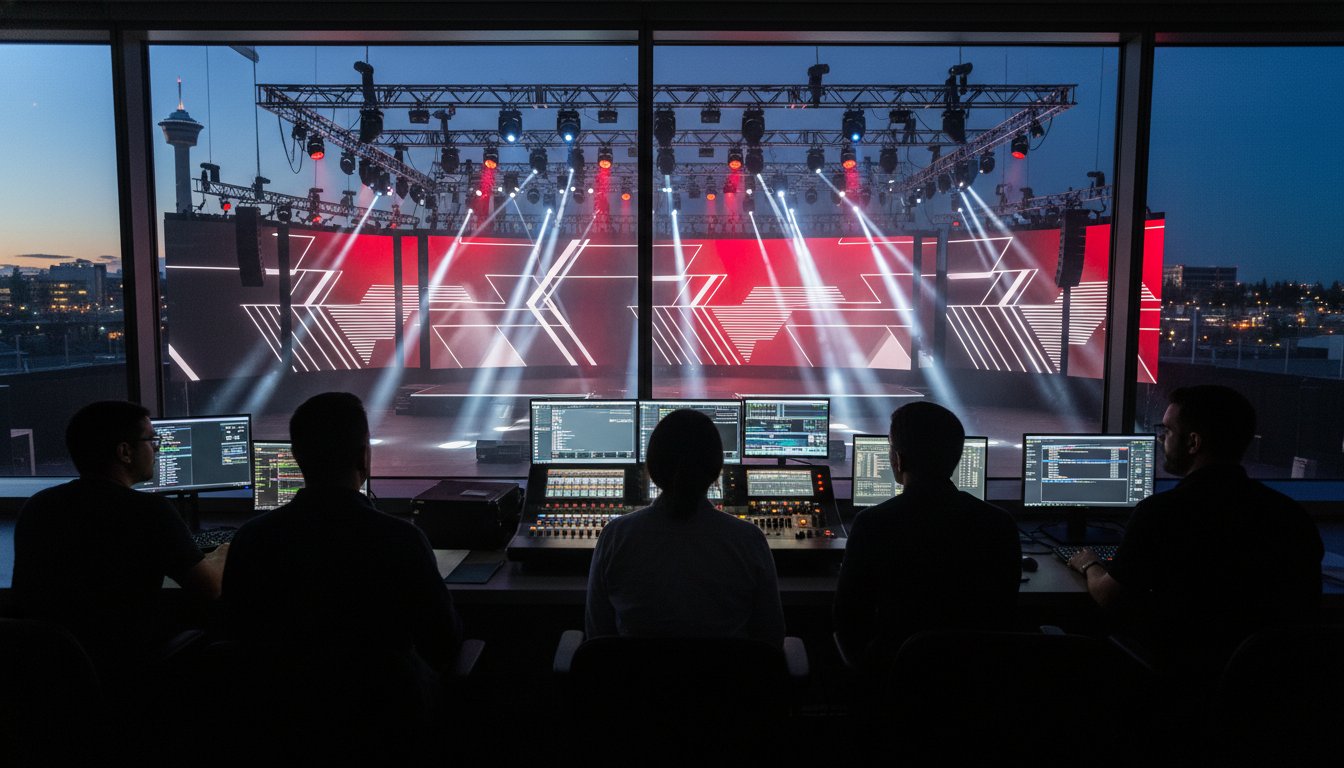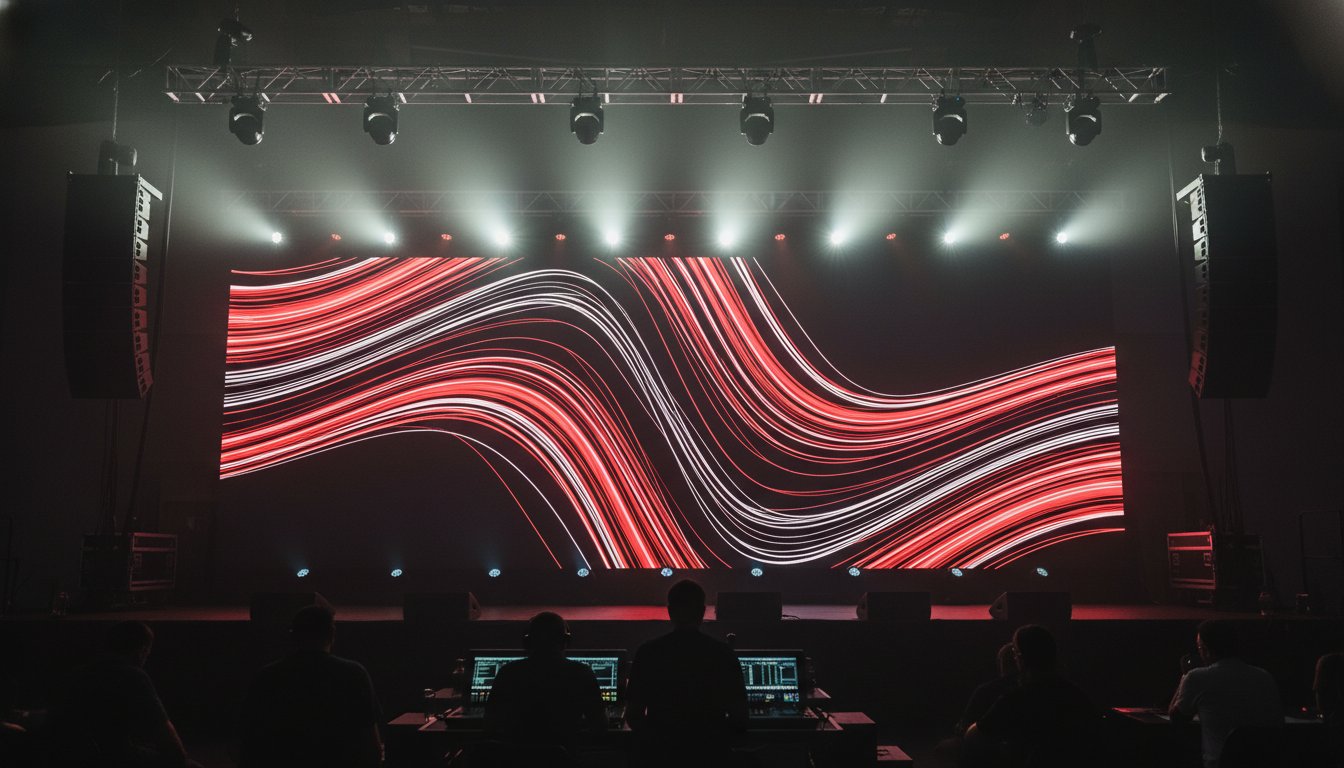
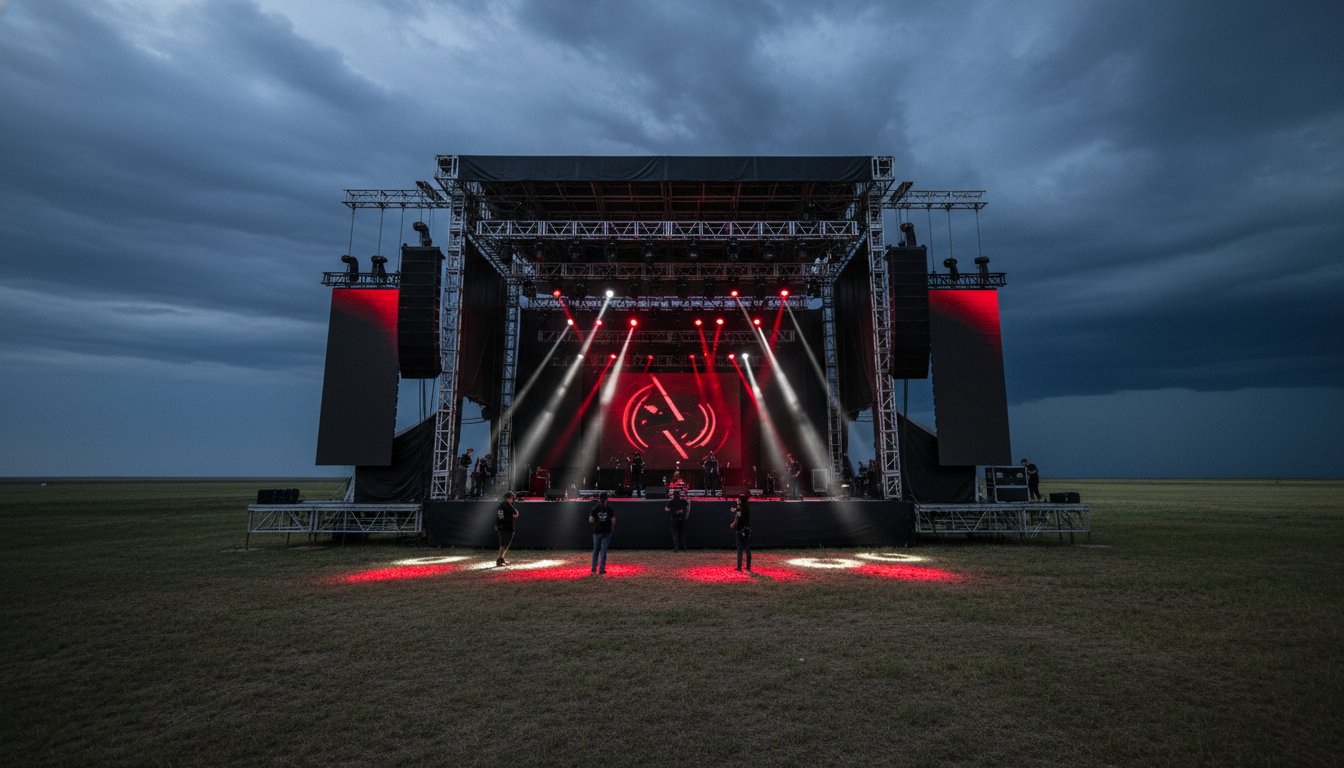
Can your outdoor stage handle a 70 km/h Saskatchewan prairie gust while supporting a three-ton LED wall and a full concert audio rig? Finding the right saskatchewan mobile stage rental isn't just about booking a platform; it's about securing a precision-engineered production hub that stands up to our province's notorious weather and strict 2026 structural engineering codes. You already know that an outdoor event in Regina or Saskatoon carries high stakes. Between the technical demands of modern audio systems and the logistical headache of municipal permits, the margin for error is razor thin.
We've designed this guide to help you navigate these complexities so you can select, secure, and integrate a professional mobile stage that protects your talent and your investment. You'll learn about the latest National Building Code requirements for Saskatchewan, how to avoid hidden transport costs, and the best ways to ensure your event lighting and LED displays sync perfectly with your structure. From understanding permit timelines to managing technical support, we'll give you the roadmap to a flawless, high-performance production.
Key Takeaways
- Understand the technical shift toward hydraulic mobile units and why they've become the 2026 benchmark for safety and efficiency across the prairies.
- Master the municipal permit process by ensuring your stage provider delivers stamped engineering drawings that meet current Saskatchewan structural codes.
- Optimize audience sightlines and production value by calculating the correct trim height and load capacity for your saskatchewan mobile stage rental.
- Simplify your event logistics by coordinating staging, power distribution, and technical support through a single professional production partner.
Professional Mobile Stage Rental in Saskatchewan: 2026 Standards
Saskatchewan's event landscape has shifted toward higher technical expectations and stricter safety protocols. Whether you're planning a multi-day music festival in the Qu'Appelle Valley or a high-profile corporate gala in Regina, the stage serves as the literal and metaphorical foundation of your production. In 2026, a saskatchewan mobile stage rental has become the preferred choice for organizers who prioritize structural integrity and rapid deployment. These units aren't just platforms; they're sophisticated pieces of machinery designed to support massive loads while withstanding the unpredictable prairie elements.
A professional stage acts as the primary anchor for all other technical elements. It provides the essential rigging points required for professional audio systems, ensuring that line arrays are flown at the precise height and angle for optimal coverage. Without a certified, stable structure, even the most expensive AV gear cannot perform to its full potential.
Trailer-Mounted vs. Modular Staging
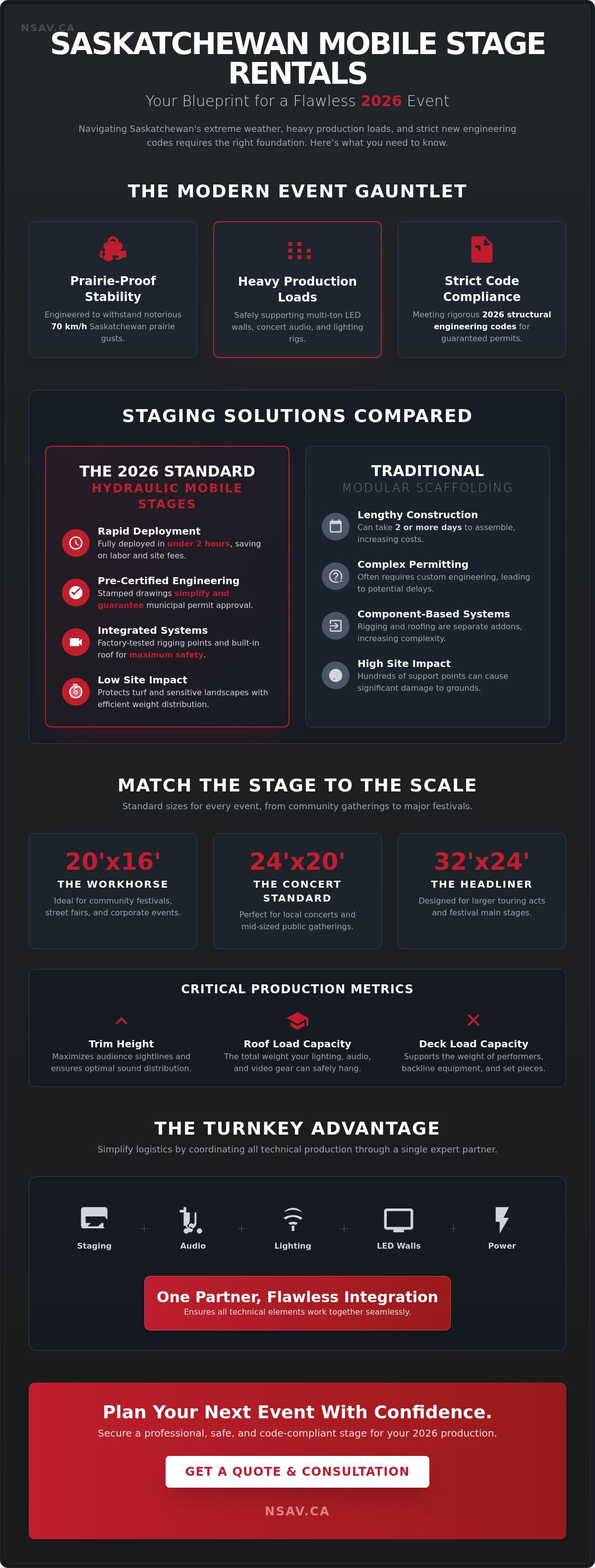
The primary distinction in modern staging lies between trailer-mounted hydraulic units and traditional modular scaffolding. Trailer-mounted stages, often referred to as hydraulic mobile units, arrive as a single cohesive trailer. The setup speed is a major advantage; a skilled crew can often have a mobile stage fully deployed in under two hours. In contrast, modular builds can take two days or more to assemble. This efficiency translates directly into labor savings and reduced site rental fees.
Mobile units also offer a significantly lower site impact. Because the weight is distributed through the trailer's chassis and specialized outriggers, they're much kinder to park turf and sensitive landscapes than modular systems that require hundreds of individual support points. For versatile programming, many of these systems can be adapted into Thrust Stage Configurations, allowing the performance to move deeper into the crowd for a more immersive experience.
Why Professional Production Firms Prefer Mobile Units
Reliability is the cornerstone of any successful event. Professional production firms favor mobile units because they offer integrated rigging points that are factory-tested and certified. This eliminates the guesswork involved in hanging heavy lighting rigs or LED walls. In Saskatchewan, where municipal permit offices increasingly demand stamped engineering drawings, mobile stages provide a consistent, pre-certified solution that simplifies the approval process.
Weather protection is another critical factor. These units feature built-in, heavy-duty roofs that deploy with the stage. This provides immediate shelter for sensitive AV rentals and electronics the moment the roof is raised. In a province where a sudden thunderstorm or high-wind event can appear without warning, having a roof that is structurally rated for high wind loads is a non-negotiable safety requirement for 2026.
Comparing Mobile Stage Sizes and Load Capacities
Selecting the right dimensions for your event involves more than just measuring the ground space. It requires a deep understanding of how your production interacts with the structure's physical limits. For a saskatchewan mobile stage rental, you generally choose between three industry-standard sizes: 20x16, 24x20, and 32x24 configurations. Each size offers different rigging capacities and deck strengths that dictate what kind of show you can actually host.
Trim height is a critical metric often overlooked by first-time organizers. It refers to the distance between the stage deck and the bottom of the roof structure. A higher trim height ensures that your audience has clear sightlines even from the back of the crowd. It also allows you to fly your audio arrays higher for better sound distribution. When planning your rig, you must balance the deck load, which supports your performers and backline, with the roof load, which carries your lighting and video gear. Adhering to Federal Safety Regulations regarding temporary structures is essential to prevent structural failure under these heavy loads.
Small to Mid-Sized Mobile Stages (20' to 24')
The 20x16 and 24x20 models are the workhorses of community festivals, local concerts, and corporate speaking engagements. These stages offer a compact footprint, making them ideal for urban street fairs or smaller park spaces. While they're efficient, they have specific rigging limits. You'll need to calculate the weight of your compact line arrays and basic lighting fixtures carefully to stay within certified safety margins. These units are typically towed by heavy-duty pickup trucks, requiring less aggressive site access than their larger counterparts. If you aren't sure which size fits your venue, the team at NSAV can help you map out your specific site plan.
Large Format Concert Stages (32' and Up)
For major festivals and national touring acts, large format stages are a necessity. These structures provide the massive roof load capacity required for heavy LED wall deployments and sophisticated lighting rigs. The SL250 class, for example, offers significantly more rigging depth and height than the SL100 or smaller utility stages. Beyond the performance area, these larger stages provide crucial space for monitor engineers and backline storage. Choosing a 32x24 or larger setup ensures your technical crew has the room to manage a complex show without crowding the talent or compromising the visual impact of the performance.
Engineering Safety and Wind Ratings for Saskatchewan Events
Saskatchewan's wide-open geography creates a unique set of aerodynamic challenges for outdoor productions. A 60 km/h wind gust isn't a rare weather event here; it's a typical Tuesday on the prairies. This environmental reality makes wind ratings the single most important specification when choosing a saskatchewan mobile stage rental. Under the National Building Code (NBC) 2025 standards recently adopted in the province, temporary structures exceeding 10 square meters require structural designs stamped by a professional engineer registered in Saskatchewan. These engineering drawings must be sealed within one year of the latest code adoption to remain valid for municipal permits in cities like Regina and Saskatoon.
Stability is maintained through precise ballast and anchoring systems. While ground anchors are effective in rural festival sites with high soil compaction, urban environments often demand external ballast like concrete blocks or weighted water barrels. Each anchoring method must align with the stage's specific engineering certifications. At NSAV, we prioritize production management that includes active weather monitoring. Our on-site technical supervisors are trained to execute safety protocols long before a weather front arrives, ensuring both the crew and the audience remain protected.
Weather Action Plans and Compliance
Every professional outdoor event needs a documented Weather Action Plan. This plan defines the high-wind threshold, typically between 60 km/h and 72 km/h, at which the stage roof must be lowered to its safety position. Adhering to these limits is essential for maintaining insurance coverage and meeting local safety bylaws. For broader context on industry best practices, the Live Performance Safety Guidelines provide a robust framework for managing temporary structures. Organizers should also account for Saskatoon’s permit review timelines, which can range from 30 to 90 days depending on the event's complexity.
Rigging Safety and Structural Integrity
The roof of a mobile stage is a dynamic load-bearing structure. Calculating point loads for concert audio systems and lighting rigs is a precise science. You can't simply hang gear wherever it fits; it must stay within the engineered zones specified in the manual. One of the most dangerous mistakes is attaching solid vinyl banners to the stage without approval. These act as giant sails in Saskatchewan gusts, creating immense lateral pressure that can compromise the structure. We always recommend professional acoustic mesh over solid materials to allow wind to pass through the rig safely. If you're unsure about your rigging plan, it's best to contact us early in the planning phase.
Turnkey Integration: Audio, Lighting, and LED Walls
Viewing a stage as a simple platform is a mistake. In modern production, the structure is a high-performance hub that must seamlessly house complex technical systems. Choosing a single partner for your saskatchewan mobile stage rental and AV rentals eliminates the friction between separate vendors. When one team manages the structural engineering and the technical deployment, you avoid the common headache of gear that doesn't fit or power requirements that aren't met. This integrated approach ensures that every piece of hardware, from line arrays to lighting fixtures, works in harmony with the stage’s rigging points.
Power distribution is the heartbeat of this integration. A professional setup requires more than just a few extension cords. It demands industrial-grade generators and sophisticated stage power distros capable of handling the surge loads of high-output amplifiers and LED panels. Clean cable management is also vital. We prioritize routing all signal and power lines through the stage's internal channels or specialized cable bridges. This doesn't just create a professional aesthetic; it prevents trip hazards and protects your equipment from the elements. If you're ready to simplify your next event, reach out to the NSAV team for a comprehensive production plan.
Maximizing Visual Impact with LED Walls
The rise of the LED wall has transformed how audiences engage with outdoor festivals. On a mobile stage, you have two primary options: flying the panels from dedicated side-wing towers or ground-stacking them on the deck. Flying the wall is often the superior choice for visibility, as it keeps the sightlines clear for the entire crowd. For Saskatchewan’s bright summer festivals, we utilize high-nit, daylight-visible screens that remain crisp even under direct prairie sun. Successful deployment requires specialized video signal processors located on-stage to ensure zero latency between the performance and the display.
Concert Audio and Lighting Synchronization
Acoustic optimization starts with the structure. Modern mobile stages often feature integrated line array towers that allow audio systems to be flown at the ideal height for long-throw sound coverage. This prevents the "muddy" sound often associated with ground-stacked speakers. Lighting is equally dependent on the stage's architecture. The roof height dictates the "throw distance" for your fixtures. For corporate speakers, a higher trim height allows for steeper lighting angles that eliminate harsh shadows on the face. For organizers planning events across provincial lines, our Music Festival Stage Rental Alberta guide offers essential insights into cross-border logistics and regional production standards.
Booking Logistics for Saskatchewan Mobile Stage Rentals
Securing a saskatchewan mobile stage rental involves more than just a signature on a contract. It requires a logistical roadmap that accounts for the province's vast geography and the high demand of the summer festival circuit. For events scheduled between June and September, a lead time of 6 to 12 months has become the standard in 2026. Early booking doesn't just guarantee the hardware; it allows sufficient time for the municipal permit reviews mentioned in previous sections, which often require 30 to 90 days in cities like Saskatoon and Regina.
Site preparation is the next critical step. A mobile stage is a heavy, precision-engineered trailer that requires a level, compacted surface for safe deployment. You must ensure the venue provides adequate clearance for a heavy-duty tow vehicle and the trailer's turning radius. Logistics costs, often categorized as mobilization fees, are a necessary factor to consider. These fees cover the transport and labor required for rural Saskatchewan locations where travel distance and fuel impact the production budget. Our process is designed for clarity, moving from an initial technical consultation through to the final post-event strike.
Saskatchewan Province-Wide Deployment
Our reach extends far beyond the major hubs of Regina and Saskatoon. We provide technical support and staging for events in Prince Albert, Moose Jaw, and remote community celebrations across the prairies. Managing logistics for a rural fair requires a different approach than an urban corporate show, particularly regarding power availability and soil stability. Because every site is different, we evaluate access points and ground conditions during the planning phase. To help with your budgeting, you can learn more about how to estimate mobile stage rental costs for the upcoming season.
Finalizing Your Event Production Plan
Reliability is built into every stage of our service. Every saskatchewan mobile stage rental includes on-site technical support from a qualified NSAV stage technician. This isn't just about pushing buttons; it's about having a steady hand on-site to monitor wind speeds and oversee the structural integrity of the rig. We also assist in coordinating with local authorities and fire marshals to ensure your site plan meets all safety bylaws and provincial regulations. This proactive approach reduces stress and ensures your production meets the high standards your audience expects. When you're ready to secure your date and move your vision forward, Contact Northern Signal AV for a custom quote tailored to your specific event needs.
Secure Your Performance Foundation for 2026
Choosing the right saskatchewan mobile stage rental means balancing technical complexity with the harsh realities of prairie weather. We've explored how 2026 structural standards and wind ratings dictate safety, and why integrated rigging points are essential for modern audio and visual deployments. By prioritizing engineered reliability over generic platforms, you ensure your event remains standing regardless of a sudden gust or technical challenge. A stage is the structural heartbeat of your production; it must be as resilient as it is functional.
At NSAV, we function as your professional partner, delivering technical confidence across the entire province. We provide certified engineering drawings to simplify your permit process and offer full turnkey AV integration so your lighting, sound, and LED walls work in perfect harmony. Serving all of Saskatchewan, our team stands ready to transform your site into a high-performance hub. Get a Turnkey Saskatchewan Mobile Stage Quote today and secure the steady hand your event deserves. Let’s make your 2026 season a masterclass in professional production.
Frequently Asked Questions
How much does a mobile stage rental cost in Saskatchewan for 2026?
Pricing for a saskatchewan mobile stage rental varies based on the unit's size, the duration of your event, and the mobilization distance to your specific site. Professional production firms in the province don't typically offer flat rates because every deployment requires a custom logistics plan. Your total investment will also reflect the level of technical support, insurance coverage, and municipal permit coordination required for a safe and compliant event.
What wind speeds can a mobile stage safely withstand?
Professional mobile stages are engineered to survive wind gusts up to 115 km/h when fully deployed and anchored. However, operational safety protocols require proactive measures much earlier. Most manufacturers specify that the roof must be lowered to a safety position once sustained winds or gusts reach the 60 to 72 km/h range. This protects the structural integrity of the rig and the sensitive audio and lighting gear hung from the roof.
Do I need a permit to set up a mobile stage in Regina or Saskatoon?
Yes, any temporary structure exceeding 10 square meters requires a permit in major Saskatchewan municipalities. Under the National Building Code 2025 standards, you must provide engineering drawings stamped by a professional engineer registered in Saskatchewan. Because review times in Regina and Saskatoon can range from 30 to 90 days, it's essential to begin the application process well in advance of your scheduled festival or corporate event.
How long does it take to set up and strike a mobile stage?
A hydraulic saskatchewan mobile stage rental is designed for rapid deployment, typically taking between 90 minutes and three hours to set up. This timeline depends on the specific stage model and the levelness of the site. Striking the stage is equally efficient, often requiring less than two hours once the production crew has cleared the lighting and audio equipment. This speed significantly reduces labor costs compared to traditional modular builds.
Can a mobile stage support a full LED video wall?
Modern mobile stages feature high-capacity rigging points specifically engineered to support the weight of a professional LED wall. While smaller utility stages have modest limits, large format concert stages can carry thousands of pounds on their roof structure or dedicated side wings. You must provide the exact weight and dimensions of your video panels during the planning phase so our technicians can verify the point loads against the stage's certified engineering manual.
What are the power requirements for a mobile stage and AV system?
While the stage's internal hydraulics often run on independent power, the production gear requires a robust external electrical source. A standard concert setup usually needs a 100-amp to 400-amp three-phase power distribution system. This is typically provided by a towed industrial generator. We calculate the total draw of your audio systems, visual displays, and lighting rigs to ensure the power supply is stable, clean, and capable of handling peak performance loads.
Do you provide mobile stage rentals for winter events in Saskatchewan?
Mobile stages are available for winter use, though extreme prairie cold requires specialized logistics. Low temperatures affect hydraulic fluid viscosity, and snow load limits must be strictly monitored to maintain structural safety. Organizers should ensure the site is cleared of snow and properly sanded for heavy vehicle access. If you're planning a winter festival, check with our team to discuss temperature thresholds and additional heating requirements for the stage deck.
Is an operator required to stay on-site during the event?
Yes, a certified technician is required to remain on-site for the duration of the event to ensure operational safety. The technician's primary role is to monitor real-time weather conditions and manage the hydraulic systems if the roof needs to be lowered due to high winds. This on-site presence provides the technical confidence and mastery required to protect the talent, crew, and audience from the unpredictable elements often found in the Saskatchewan environment.