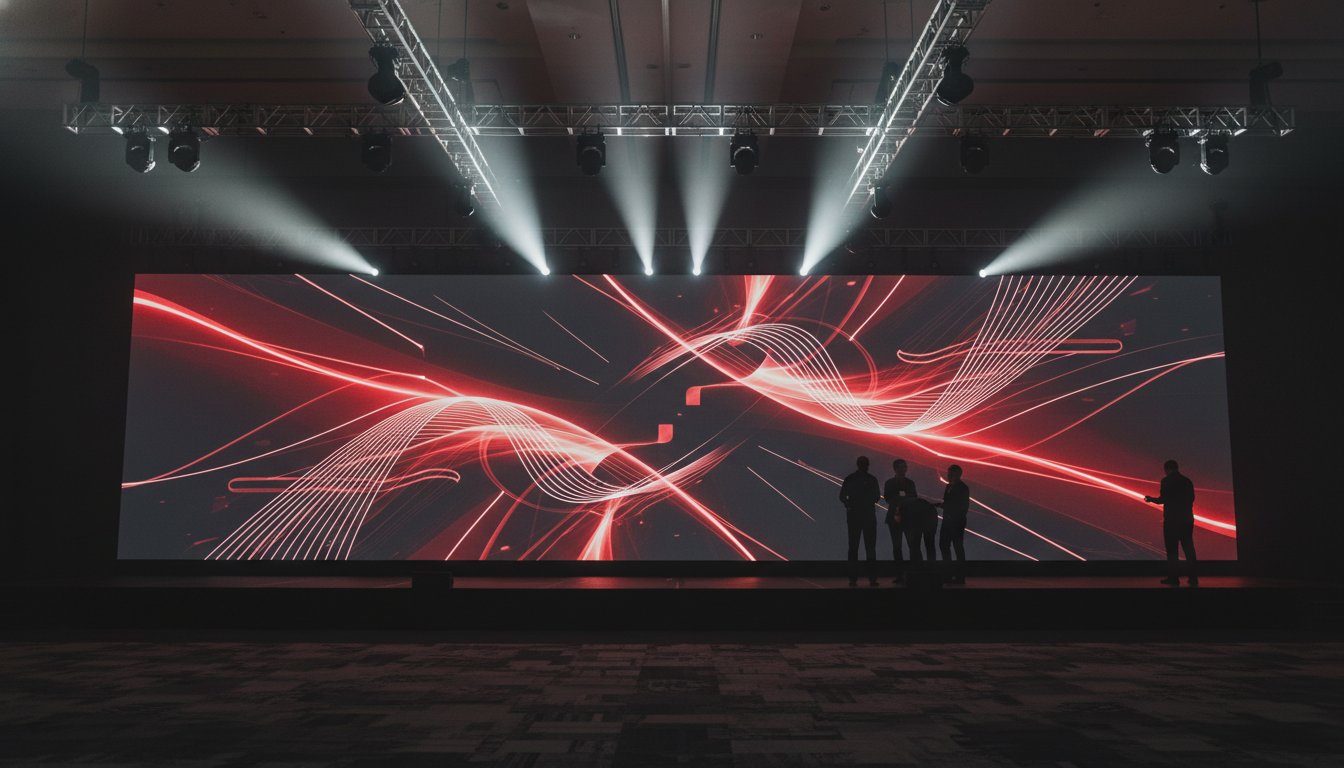
Over 63% of global event organizers now prefer rental LED walls over traditional projection systems, signaling a massive shift in how we command audience attention. This trend proves that securing a high-quality led screen rental for events is no longer just a hardware transaction; it's a critical production management task. You know that the right visual impact can define an entire brand experience, yet the technical hurdles often feel overwhelming.
It's common to feel uneasy about complex pixel pitch calculations or the potential for technical failure during a live keynote. You want a flawless display without the stress of hidden rigging fees or unexpected power requirements. This 2026 guide provides everything you need to plan and deploy high-impact video walls with total confidence. We will break down the latest standards for resolution, explain how to maximize your visual ROI, and show you how a reliable technical partner handles the heavy lifting so you can focus on your audience.
Key Takeaways
- Learn to calculate the 'Golden Rule' of viewing distances to ensure your pixel pitch provides crystal-clear resolution for every attendee.
- Compare the total value of led screen rental for events against traditional projection to find the right fit for your venue’s light levels and floor plan.
- Identify critical rigging and power specifications, from structural load limits to ground-stacking methods, to avoid hidden costs and technical delays.
- Master the integration of modular video walls with professional audio systems and lighting to create a seamless, high-impact production experience.
The Evolution of Event Visuals: Why LED Screens are the New Standard
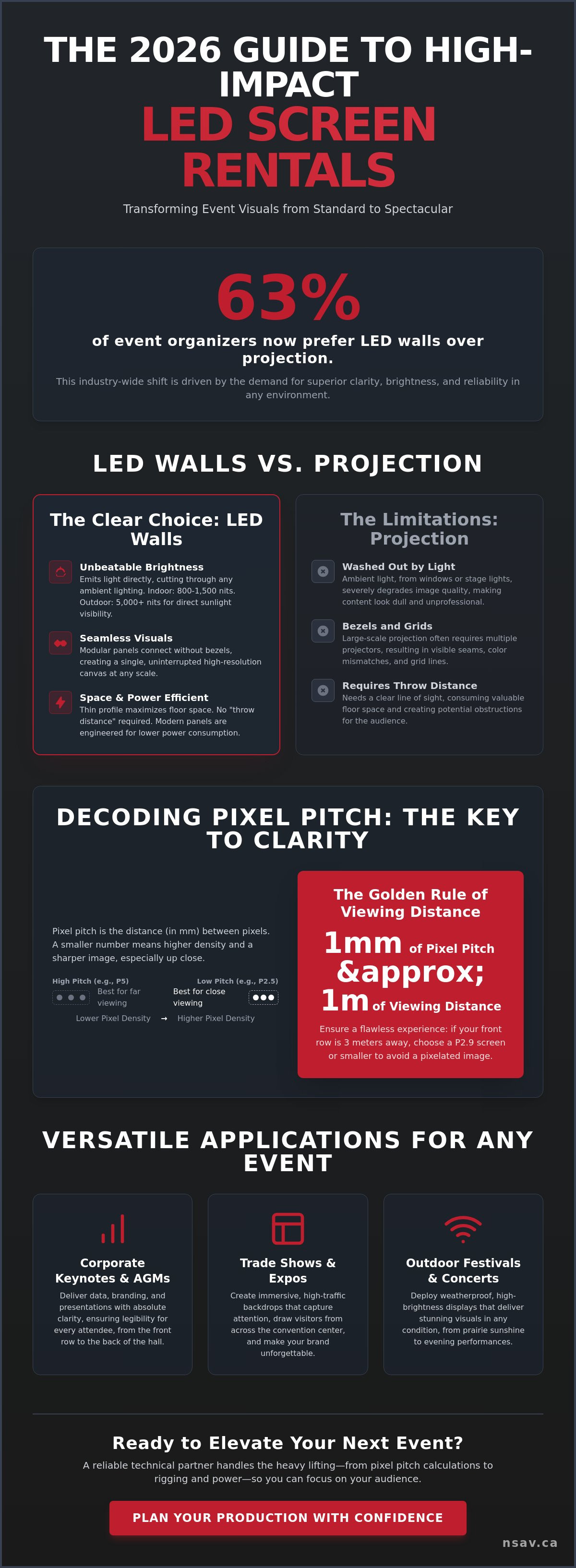
The visual landscape of live production has fundamentally changed. Over 63% of global event organizers now prioritize rental LED walls over traditional projection systems, according to recent industry projections for 2026. This isn't just a trend; it's a technical evolution driven by the need for clarity and reliability. An LED video wall is a modular display system composed of individual panels that use LED display technology to create a single, high-resolution canvas. Unlike projectors that reflect light onto a surface, LED screens emit light directly. This creates a punchy, vibrant image that commands a room's attention immediately.
Psychologically, high-brightness visuals do more than just show content. They drive engagement. High contrast ratios and deep black levels help the human eye track information more easily, which reduces audience fatigue during long presentations. When you choose a professional led screen rental for events, you're investing in the audience's ability to stay focused and connected to your message. This shift is visible everywhere, from high-stakes corporate boardrooms to massive outdoor festival stages.
LED Wall vs. Projector: The Critical Differences
Ambient light is the traditional enemy of projection. In a sun-drenched ballroom or a trade show floor with harsh overhead lighting, projected images often look washed out and dull. LED screens solve this problem through raw power. Indoor panels typically offer brightness levels between 800 and 1,500 nits, while outdoor units can exceed 5,000 nits to remain perfectly visible in direct sunlight.
Space efficiency is another major factor for modern planners. Projectors require a specific "throw distance," which often means losing valuable floor space to keep the line of sight clear. LED walls are thin and modular. They can be mounted directly against a wall or integrated into a stage design, maximizing the usable area for your attendees. Because they're built from interlocking panels, there are no bezels or grid lines. You get a seamless visual experience that projection simply can't match at a large scale.
Common Use Cases for LED Screen Rental in 2026
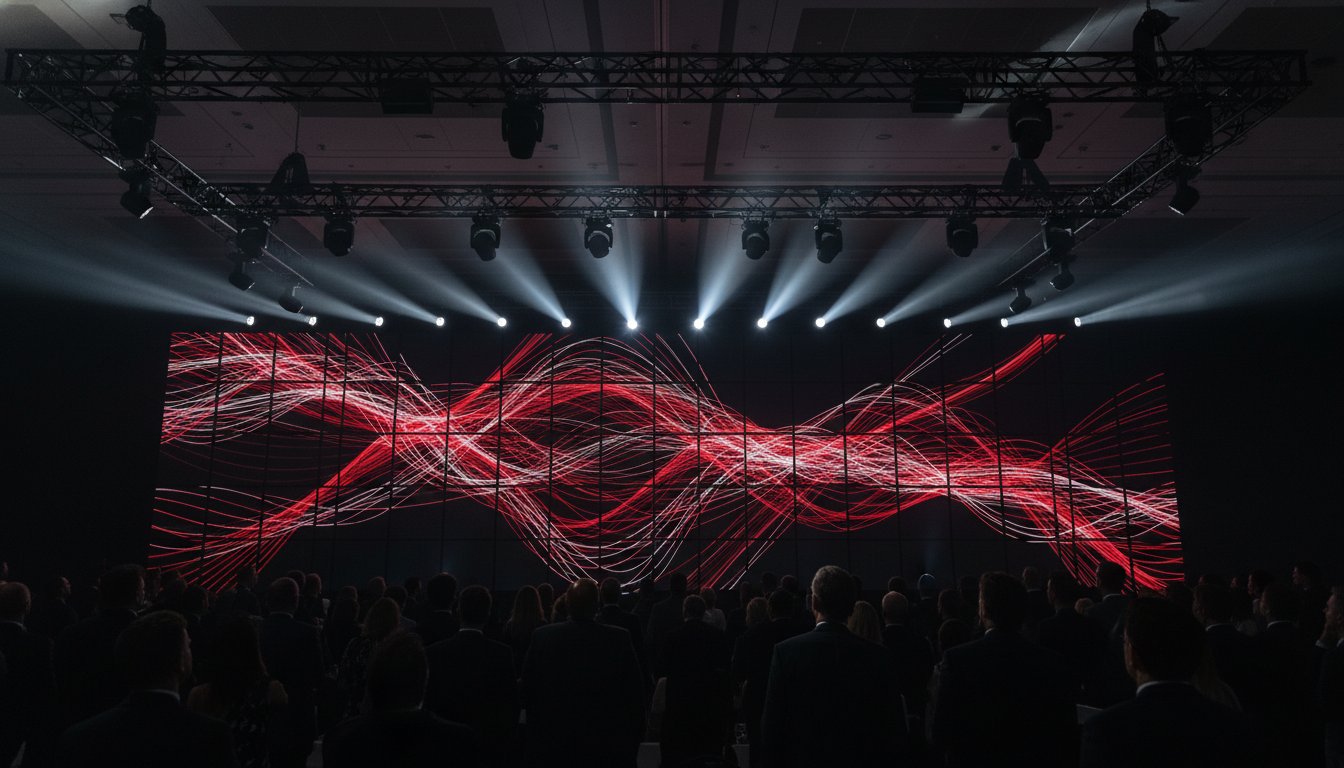
For corporate keynotes and Annual General Meetings (AGMs), clarity is paramount. Presenters need their data and branding to be legible from the back of the hall. A high-resolution led screen rental for events ensures that every spreadsheet and video clip is sharp and professional. In the competitive environment of trade shows, standing out is the only goal. Brands now use LED walls to create immersive, high-traffic backdrops that draw visitors from across the convention center.
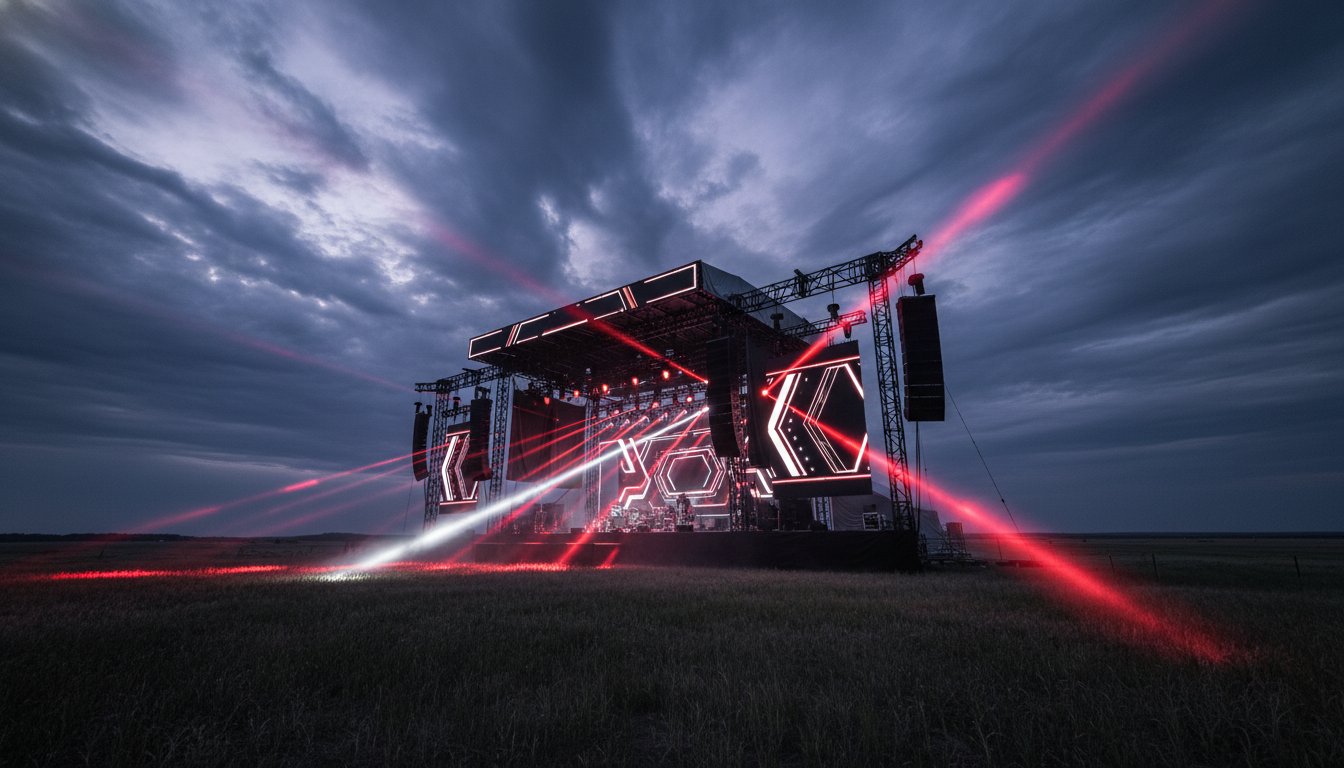
We also see a significant rise in outdoor festivals and community events across Alberta and Saskatchewan. These environments demand weatherproof, high-brightness displays that can handle the unpredictable prairie weather. Whether it's a community gathering in Regina or a major brand activation in Calgary, the transition to LED reflects a commitment to technical excellence and a flawless attendee experience.
Understanding LED Wall Technology: Pixel Pitch, Brightness, and Resolution
Pixel pitch is the foundation of image clarity. It measures the distance in millimeters from the center of one pixel to the center of the next. A smaller number indicates higher pixel density, which results in a sharper image at close range. For anyone managing an led screen rental for events, understanding this spec is the difference between a crisp presentation and a pixelated mess. If you're unsure about which hardware fits your space, reviewing a technical guide to LED screens for events can help clarify these core concepts.
The Golden Rule of viewing distance is a vital calculation for production planners. Generally, 1mm of pixel pitch equals roughly one meter of optimal viewing distance. If your front row is three meters away, a P2.9 or P2.5 screen is necessary. If you choose a P5 panel for that same distance, your audience will see individual dots rather than a cohesive image. This technical precision ensures your visuals remain immersive rather than distracting. Our team at Northern Signal AV Ltd. can help you select the perfect hardware for your specific venue layout.
Brightness is measured in "nits," which represents the light output of the screen. Indoor environments typically require 800 to 1,500 nits. Outdoor events demand much more. To compete with direct sunlight, screens must reach at least 5,000 nits. Reliability in these environments also depends on the IP rating. We look for IP65 ratings on the front to ensure weatherproofing against rain and dust. Refresh rates are also critical for modern events. A refresh rate of 3,840Hz or higher is standard in 2026. This prevents the flickering or "rolling lines" that often appear when an LED wall is filmed or live-streamed.
Choosing the Right Pixel Pitch for Your Venue
Fine-pitch displays, specifically P2.5 and below, have seen a 41% increase in use for corporate boardrooms and intimate galas. These panels allow for high-detail content like spreadsheets or 4K video to be viewed from just a few feet away. For most indoor conferences, P3.9 to P4.8 remains the industry sweet spot. It offers a balance of high resolution and cost-efficiency. When moving to large-scale outdoor festivals, P5 to P10 is the standard. At these distances, the human eye cannot distinguish individual pixels, making the larger pitch a practical choice for massive stages.
Resolution and Aspect Ratio Logistics
LED walls are modular. They don't always naturally form a standard 16:9 aspect ratio. An LED processor acts as the brain of the system, scaling and mapping your signal to the physical dimensions of the wall. It's essential that your source material matches the physical resolution of the panels. If your wall is a custom size, your content creators must build files to those exact pixel dimensions. This prevents stretching or cropping. If you're feeling overwhelmed by these technical requirements, you can always reach out to a professional partner to handle the signal mapping for you.
LED Walls vs. Projection: Making the Right Choice for Your Venue
Selecting the right display technology depends on your venue's physical limits and your production goals. Projectors were once the default for large gatherings, but the shift toward led screen rental for events is now driven by a need for absolute reliability. When you evaluate the total value of your production, consider the risk of a single point of failure. A projector bulb popping mid-presentation can derail a keynote. LED walls offer built-in redundancy. If a single module experiences a glitch, the rest of the wall continues to function. This allows for a seamless experience that most attendees won't ever notice.
Ceiling height and floor space often dictate the best technical path. Projectors require a clear line of sight and significant throw distance, which often eats into your seating capacity. LED walls occupy a much smaller footprint. They can be ground-stacked or flown close to walls, freeing up space for more attendees or additional production management assets. This space efficiency is vital in tight convention centers or hotel ballrooms where every square foot impacts your ROI. Whether you're organizing a gala in Calgary or a corporate meeting in Saskatoon, the "wow factor" of a high-contrast LED display creates a professional atmosphere that projection struggles to match.
When to Choose an LED Video Wall
Choose an LED video wall when you need to fight ambient light. If your venue has floor-to-ceiling windows or intense stage lighting, projection will look washed out. LED excels in these bright environments. It's also the superior choice for high-traffic trade shows. A bright, high-contrast display acts as a beacon, pulling eyes toward your brand from across a crowded hall. If your event involves live streaming or heavy photography, the high refresh rates of modern LED panels ensure your visuals look perfect on every camera.
When Projection Might Still Be the Answer
Projection still has a place in specific scenarios. If you're working on a very tight budget and need an ultra-wide "blended" display to cover a massive wall, high-end projection can be a cost-effective alternative. It is also the only viable technology for complex projection mapping. This is where visuals are wrapped around irregular 3D surfaces or architectural elements. For small breakout rooms where the audience is minimal, a simple large-format TV display or a basic projector is often sufficient for standard slide decks. If you're unsure which path to take, you can consult with our technical team to review your venue's floor plan.
Planning Your LED Setup: Rigging, Power, and Content Requirements
Effective production management transforms a simple hardware hire into a successful show. When you secure an led screen rental for events, the planning phase must address structural integrity and electrical infrastructure long before the first panel is uncased. Managing these variables is what separates a professional activation from a technical disaster.
Structural engineering is the first priority. A standard LED panel can weigh between 20 and 30 pounds. A large wall quickly adds up to thousands of pounds of overhead load. If you plan on "flying" the screen, you must verify that the venue’s ceiling or truss system can support the concentrated weight. For venues with lower ceilings or weight restrictions, ground-stacking is the reliable alternative. This method uses a weighted base and a specialized frame to keep the display stable at floor level without requiring overhead points.
Power distribution is another critical factor that planners often overlook. Large-scale LED walls require significant amperage. It's common for a high-resolution display to need several dedicated 20-amp circuits or even a 3-phase power tie-in. Without a precise power plan, you risk tripping breakers during the most critical moments of your presentation. Signal flow is equally important for maintaining low-latency visuals. Using NDI or high-grade SDI cables ensures that your video feed remains perfectly synchronized with live speakers and audio systems.
Logistics and Site Surveys
A site survey in Calgary or Edmonton is essential to avoid day-of delays. Our technicians check loading dock access and elevator dimensions to ensure the modular cases can actually reach the stage. For outdoor events in Saskatchewan, we also account for environmental factors like wind loading. Outdoor screens act like giant sails. They require specific ballast and structural reinforcement to stay safe in high prairie winds, ensuring your led screen rental for events remains secure in all conditions.
Content Creation and Technical Specs
Your creative team needs a detailed "pixel map" early in the design process. Because LED walls aren't always a standard 16:9 ratio, content must be built to the wall's exact pixel dimensions to avoid stretching or awkward cropping. We recommend using high-bitrate playback servers to ensure smooth motion, especially for fast-moving graphics or high-definition video. For a deeper dive into preparation, see our event production checklist.
Ready to start the technical planning for your next project? Connect with our production team for a comprehensive site evaluation and technical consultation.
Professional LED Screen Production: The Northern Signal AV Ltd. Difference
Success in live production relies on more than a high-resolution display. It needs a technical partner who treats an led screen rental for events as one piece of a high-stakes ecosystem. Northern Signal AV Ltd. positions these visual assets within a comprehensive AV rental package. This strategic approach ensures that every component, from the signal processors to the mounting hardware, is optimized for peak performance. We don't just provide equipment; we provide technical confidence.
Sound and vision are inseparable in live environments. We integrate visual displays with professional audio systems to create a unified experience. When audio is perfectly synchronized with high-refresh-rate visuals, the audience stays immersed in your message. Our on-site technical directors manage the live switches and cues, providing the mastery required to navigate complex show flows. This level of management alleviates the stress of technical failure.
Our team brings authoritative expertise to every project across Alberta, Saskatchewan, and Ontario. We understand that live production is a high-stakes endeavor where there are no second takes. By acting as your elite technical partner, Northern Signal AV Ltd. handles the heavy lifting of rigging and signal mapping. This versatility allows us to lead major projects while remaining accessible for smaller, community-focused requests.
Integrated Visual Solutions
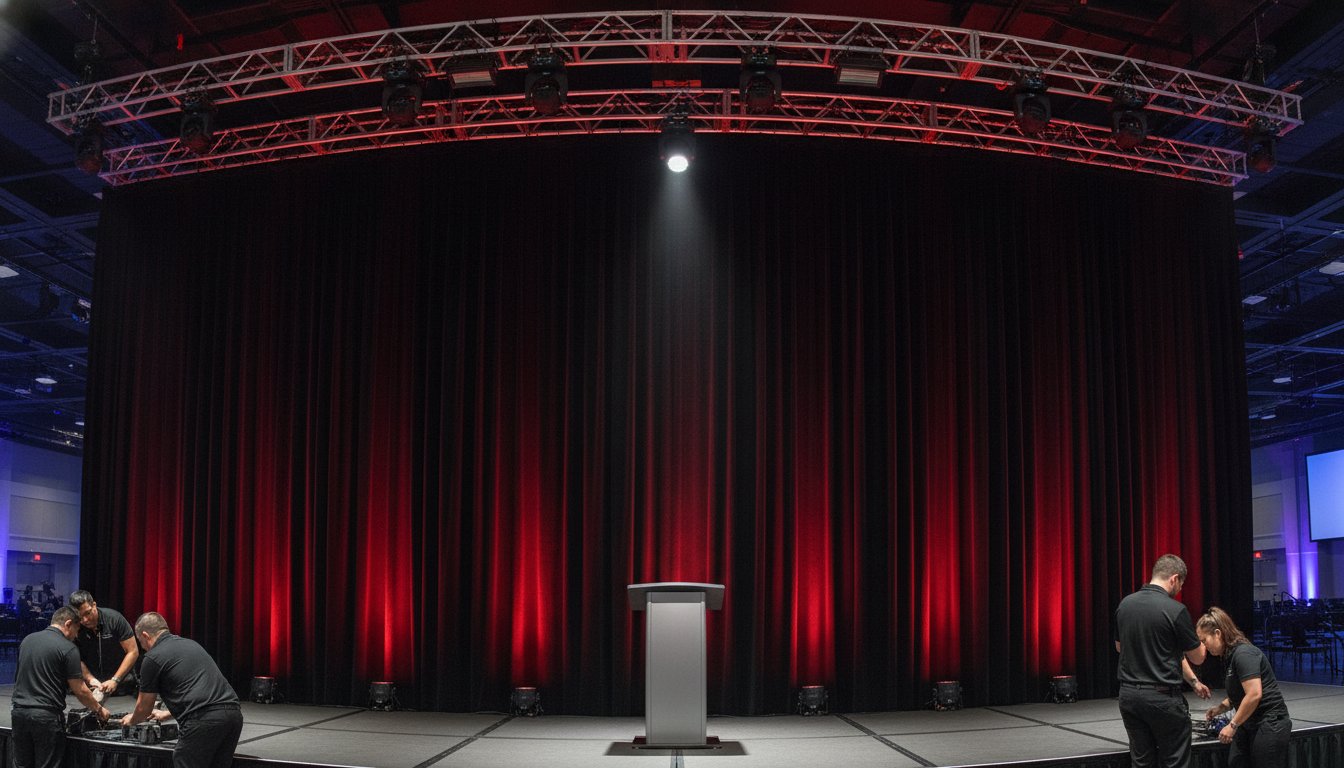
Visual impact is maximized when the LED wall works in tandem with the stage environment. We sync our displays with event lighting to maintain a cohesive brand aesthetic across the entire room. For hybrid events, the high contrast of our panels provides a perfect backdrop for live streaming. We also offer custom staging and pipe and drape solutions to frame your digital display. This creates a polished look that hides the necessary technical infrastructure.
Why Local Expertise Matters
Reliability is rooted in local knowledge. We're intimately familiar with the loading docks, power grids, and rigging points of major venues in Edmonton, Calgary, and Red Deer. This regional authority allows for rapid response times and precise planning that larger, distant competitors can't match. Whether you're hosting a corporate summit in Regina or a brand activation in Toronto, our localized expertise ensures your led screen rental for events is executed flawlessly. Contact us today for a custom production quote tailored to your vision.
Elevate Your Next Production with Technical Mastery
Success in modern event production requires a shift from simply renting hardware to managing a complete visual ecosystem. We've covered the technical essentials of pixel pitch, the logistical demands of rigging, and the undeniable brightness advantages that LED technology offers over traditional projection. Securing a professional led screen rental for events isn't just about the display; it's about the reliability of the team behind the screen.
Northern Signal AV Ltd. provides full-service production management from Edmonton to Ontario. Our high-resolution LED inventory is designed for both indoor and outdoor applications, backed by technical directors who thrive in high-stakes corporate and concert environments. We handle the complex signal mapping and power requirements so you can stay focused on your audience's experience. When your vision demands precision, we're the steady hand you need.
Ready to transform your stage? Request a Custom LED Production Quote and let's bring your brand to life with flawless clarity. Your next high-impact visual experience starts here.
Frequently Asked Questions
What is the standard aspect ratio for an LED wall rental?
LED walls are modular, so they don't have a single fixed aspect ratio, but 16:9 is the most common configuration to match standard video content. Panels are typically 500mm square or 500mm by 1000mm. We assemble these modules to create a display that fits your specific stage design, whether that is a standard widescreen format or a custom panoramic layout.
Can I use an indoor LED screen for an outdoor event in Alberta?
You should not use indoor screens for outdoor applications due to brightness and weatherproofing limitations. Indoor panels typically max out at 1,500 nits, which is not enough to compete with the bright Alberta sun. Outdoor rated panels feature an IP65 rating to protect against unpredictable prairie weather and provide over 5,000 nits of brightness for clear daytime visibility.
How much power does a typical 10x15 foot LED wall require?
A wall of this size typically requires three to five dedicated 20-amp circuits. The exact power draw depends on the pixel pitch and the brightness levels required for your venue. We calculate the total wattage based on the maximum power consumption of each module to ensure the venue's electrical infrastructure can handle the load without tripping breakers mid-show.
How long does it take to set up a professional LED video wall?
A professional installation usually takes between four and eight hours depending on the complexity of the rig. This timeline includes unloading, structural assembly, cable management, and signal calibration. Flown configurations that require overhead rigging points may take longer as we must prioritize structural safety and precise alignment before the screen is raised into position.
What is pixel pitch and why does it affect my rental price?
Pixel pitch is the distance between the centers of two pixels; smaller pitches cost more because they require a higher density of LEDs. A P2.5 screen offers much higher resolution than a P4.8, making it better for close-up viewing. When choosing an led screen rental for events, the pitch is the primary factor that determines both the hardware cost and the viewing distance.
Do I need a separate technician to run the LED wall during my event?
We always recommend having a dedicated technician or technical director on-site to manage the production. They monitor the LED processor, handle live content switching, and ensure the signal remains stable throughout the event. Having a professional at the helm allows for instant adjustments to brightness or color balance, ensuring a flawless visual experience for your attendees.
Can LED screens be used for outdoor events during the day?
Yes, high-brightness outdoor LED screens are specifically engineered for daytime use in direct sunlight. These displays emit significantly more light than projectors, which would appear washed out in an outdoor setting. This makes an led screen rental for events the superior choice for festivals, community gatherings, or brand activations where high-ambient light is a constant factor.
What kind of content files do I need to provide for an LED wall?
You should provide high-bitrate video files, typically in .mp4 or .mov formats using the H.264 or H.265 codec. It's essential that your creative team builds content to the exact pixel dimensions of the wall's custom pixel map. This prevents your graphics from being stretched or cropped, ensuring every image appears sharp and professional on the final display.