A successful hybrid event isn't just an in-person gathering with a camera in the back of the room; it's two distinct productions sharing a single pulse. When you're learning how to plan a hybrid event, the stakes are high because you're essentially managing two different shows at once. You've likely felt the pressure of ensuring remote viewers don't suffer through audio lag while in-person attendees feel neglected during virtual-only segments. It's a complex balancing act where a single technical glitch can derail months of preparation.
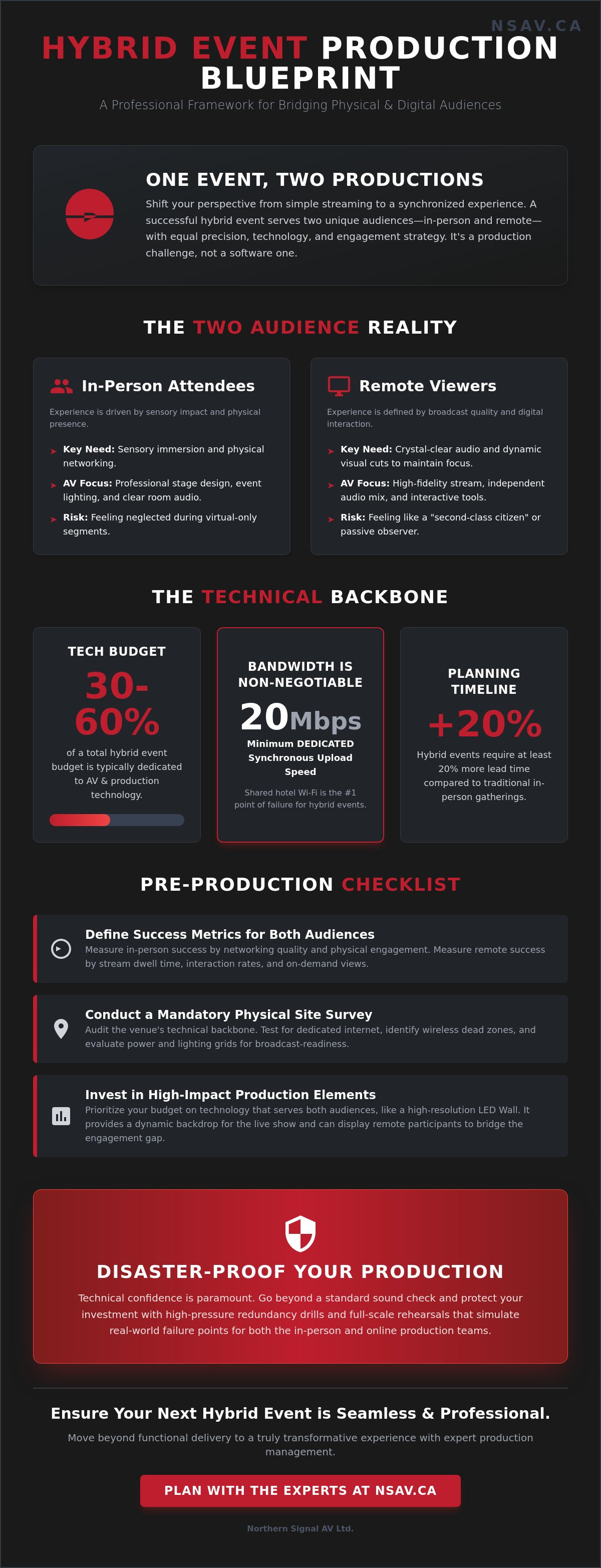
We know that technical confidence is the foundation of any high-stakes environment. With technology expenses typically making up 30% to 60% of a total hybrid event budget, you need a steady hand and a clear roadmap to move beyond functional delivery toward a truly transformative experience. This guide provides a professional production framework designed to bridge the gap between your physical and digital audiences. We'll walk you through a comprehensive checklist covering everything from dedicated bandwidth requirements to multi-camera synchronization, ensuring your next production is seamless, professional, and entirely disaster-proof.
Key Takeaways:
• Shift your perspective from basic streaming to a synchronized experience that serves two unique environments with equal precision.
• Learn how to plan a hybrid event by prioritizing a technical backbone of dedicated bandwidth and predefined success metrics for both audience segments.
• Master the use of independent audio mixes and professional visual displays to provide a cohesive atmosphere for all attendees.
• Bridge the engagement gap using dedicated digital hosts and interactive tools specifically designed for remote participants.
• Protect your production from technical failure through high-pressure redundancy drills and full-scale rehearsals that go beyond a standard sound check.
Defining the 2026 Hybrid Event Landscape
The 2026 hybrid event is no longer just a physical meeting with a passive digital observer. It has evolved into a synchronized experience designed specifically for two unique environments. While the early 2020s often relied on simple webcasts, professional corporate standards now demand high-fidelity Audio Visual Production Services that treat remote viewers as active participants. Understanding the definition of a hybrid event involves recognizing it as a dual-production effort. Each audience requires a tailored approach to engagement, audio, and visual delivery.
A common misconception is that hybrid success depends solely on your choice of platform. It doesn't. Success is a production challenge rather than a software one. When you're determining how to plan a hybrid event, you're managing two distinct shows that share a single narrative. The ROI of this approach is immense. You capture the intimacy of local impact while scaling your message to a global audience. This duality allows for a level of accessibility and inclusivity that traditional formats simply can't match. However, this reach requires a steady hand in Production Management to ensure technical glitches don't overshadow your message.
The 'Two Audience' Philosophy
Remote attendees have different psychological needs than those sitting in a ballroom. An in-person guest enjoys the sensory impact of professional Event Lighting and physical networking. The remote viewer needs high-speed visual cuts and crystal-clear audio to maintain focus. Content must translate effectively across both digital and physical mediums. This is why your production team needs a dedicated Virtual Stage Manager. This role ensures the digital feed remains dynamic while the physical room stays engaged. It prevents the "second-class citizen" feeling that often plagues poorly managed remote experiences.
Hybrid Event Formats for 2026
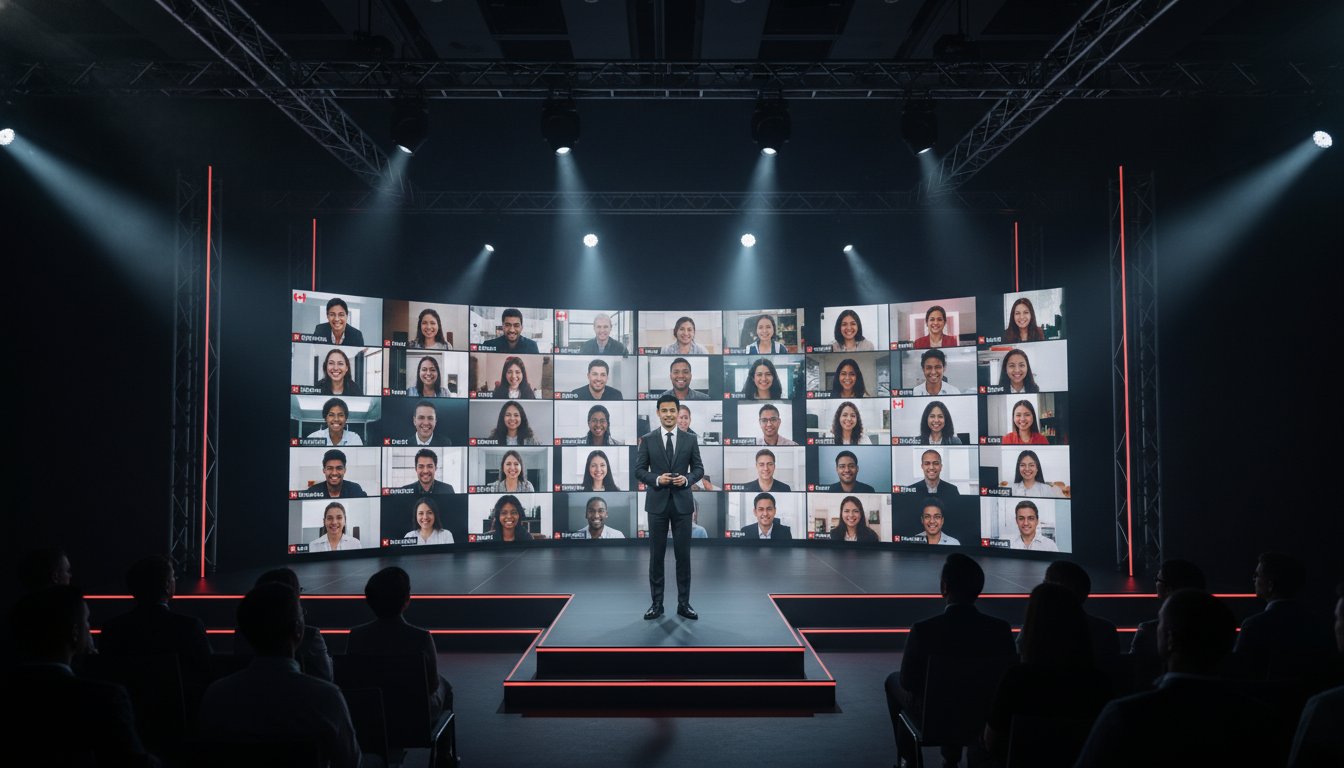
Organizations are moving toward sophisticated models like the hub-and-spoke. For example, a main stage in Calgary might connect to regional offices in Edmonton or Toronto. This creates localized energy while maintaining a unified corporate message across the country. Another popular approach is the 'Studio Audience' format for high-impact product launches. Here, the physical space is designed like a broadcast studio, often utilizing an LED Wall to display remote participants to the live speakers. You must also decide on your content lifecycle. Live-only sessions drive urgency and real-time interaction. On-demand options allow your investment to provide value long after the final curtain call.
Pre-Production: The Strategic Planning Checklist
Understanding how to plan a hybrid event starts with recognizing that your timeline is your most valuable asset. You shouldn't treat the digital component as an afterthought. Most experienced producers find that hybrid models require at least 20% more lead time compared to traditional in-person gatherings. This buffer allows for the complex synchronization of two distinct production schedules. You must define success metrics for both segments before signing any contracts. For the physical room, success might be measured by networking quality. For the stream, it's about dwell time and engagement rates. When you're determining how to plan a hybrid event, these metrics directly influence your equipment choices and staffing needs.
Venue Requirements & Site Surveys
A physical site survey is mandatory. You aren't just looking at the floor plan; you're auditing the technical backbone of the facility. A dedicated upload speed of at least 20Mbps synchronous is the professional baseline for a stable high-definition stream. Shared hotel Wi-Fi is a recipe for disaster. You also need to identify "dead zones" where wireless frequencies might drop. In many established venues across Calgary or Toronto, older structural elements can interfere with wireless mics or production comms. Evaluate the lighting grids with a critical eye. Standard house lighting often looks flat or yellow on camera. You need broadcast-ready Event Lighting to ensure your presenters look as sharp on screen as they do in the front row.
The Hybrid Budget Framework
Budgeting for dual-production involves prioritizing high-impact technology over decorative filler. Investing in a high-resolution LED Wall provides a superior visual experience compared to standard projection, particularly in bright rooms. However, the most vital line item is technical redundancy. A secondary, independent internet line is non-negotiable. If your primary connection drops, your remote audience disappears instantly. Planning your budget with professional AV rentals allows you to access top-tier hardware while maintaining financial flexibility. This approach ensures you have the right Calgary event production partner to handle the complexities of a dual-audience setup. Professional Production Management will help you identify where to save costs without compromising the integrity of either experience.
Technical Architecture: The Production & AV Checklist
Building the technical framework for a dual-audience experience requires more than just high-end gear; it requires a strategic architecture. You're essentially managing a live broadcast and a physical conference simultaneously. Mastering how to plan a hybrid event means moving beyond a "one-size-fits-all" signal path. Every piece of equipment, from the microphones to the encoders, must serve two masters with different sensory needs. Your goal is a synchronized output where the remote viewer feels the energy of the room and the in-person attendee feels the digital scale of the event.
Audio: The #1 Point of Failure
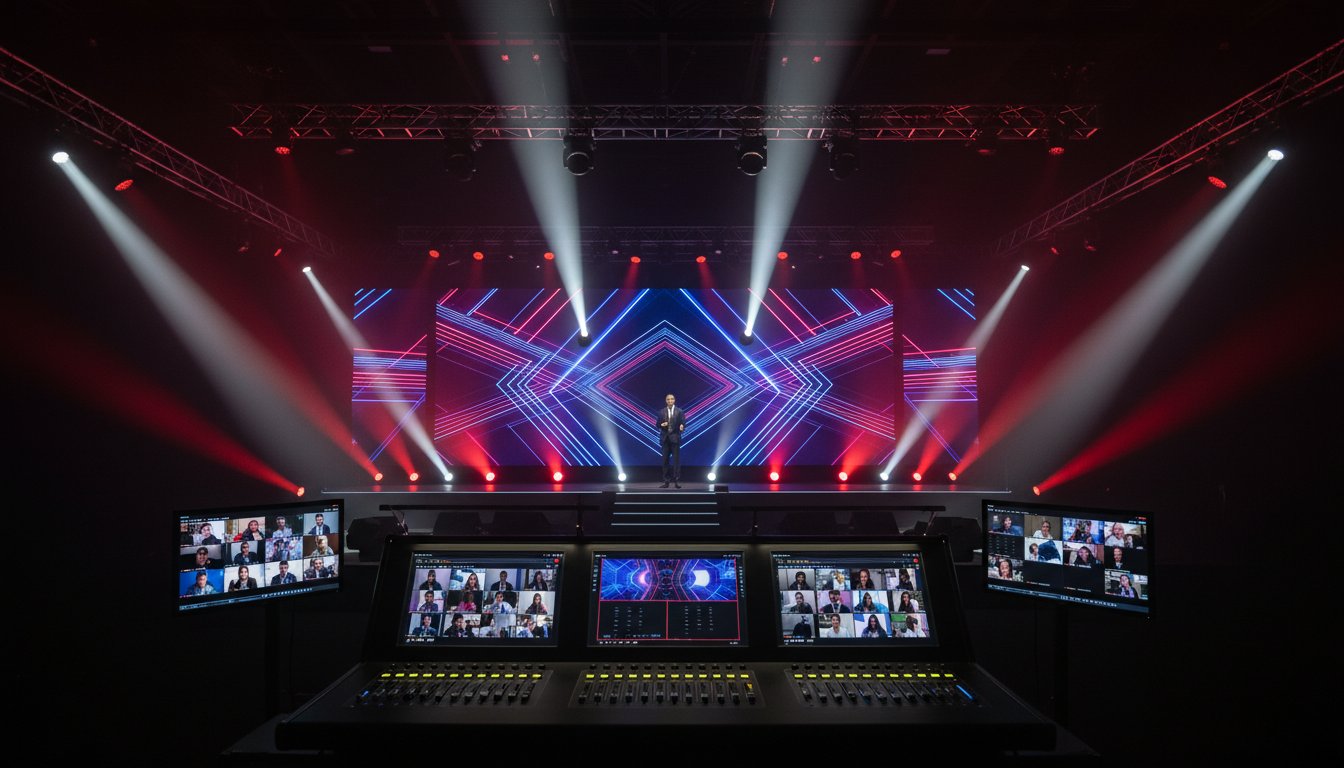
Audio is the most fragile link in the production chain. While a visual glitch is distracting, an audio failure is catastrophic. You must use digital mixers to create independent mixes for the room and the stream. This involves a technique called "Mix-Minus," which ensures remote presenters hear everything in the room except their own delayed voice. Without this, the resulting echo will derail your session. You need dedicated audio engineers focused solely on the broadcast feed to manage levels and monitor for interference. Relying on a single technician to handle both environments is a high-risk strategy that rarely pays off. For high-stakes environments, investing in professional audio systems for flawless execution ensures that every word carries the authority it deserves.
High-Resolution Visuals & LED Walls
Visual impact in 2026 is defined by "presence." You can bridge the distance for in-person viewers by integrating remote speaker faces into on-stage LED Wall displays at a life-like scale. This creates a more natural interaction between local and remote presenters. Managing aspect ratios is a key part of this process. Your stream typically requires a standard 16:9 ratio, while your physical room might utilize custom, wide-format staging. To ensure your LED walls look crisp on camera, you must consider the "Pixel Pitch." For broadcast-heavy hybrid events, a pixel pitch of 2.5mm or lower is recommended to prevent moiré patterns (those distracting wavy lines) from appearing on the digital feed.
The Streaming Infrastructure
Your streaming "pipe" is the lifeline of your remote experience. In 2026, the choice between RTMP, SRT, or WebRTC depends on your latency requirements. If real-time interaction between audiences is vital, low-latency protocols like SRT are the professional standard. Redundancy remains the golden rule. You should utilize hardware encoders for primary delivery and software-based backups as a fail-safe. This multi-layered approach protects your content from local hardware failures or ISP fluctuations. For a deeper dive into the specific hardware and software configurations required this year, consult our Professional Corporate Event Streaming Services Guide to ensure your infrastructure is built for reliability.
Audience Engagement: Facilitation for Dual Environments
Engagement in a hybrid setting is often the most difficult element to master. It requires moving beyond simple polling to create a unified community. When you're determining how to plan a hybrid event, you must ensure that your remote audience never feels like a passive observer. This requires a shift in how you structure your agenda. Traditional "sit and watch" sessions are being replaced by interactive formats that demand participation from both physical and digital seats. Without a deliberate engagement strategy, your remote viewership will likely drop off within the first thirty minutes of the broadcast.
One of the most effective ways to bridge this gap is by appointing a dedicated Digital Emcee. This host doesn't just moderate the chat; they act as the voice of the virtual audience within the physical room. They can interrupt a speaker to ask a question from the stream or provide "behind-the-scenes" commentary during in-person coffee breaks. To mirror the networking value of a physical venue, you should also implement "Virtual Lounges." These digital spaces allow remote participants to engage in small-group discussions, ensuring they receive the same peer-to-peer value as those attending in person. Successful hybrid event production depends on this level of intentional interaction.
Facilitating the Hybrid Conversation
Technical facilitation tools are essential for maintaining a two-way dialogue. In the physical room, using "Catch-Box" mics—soft, throwable microphones—ensures that the remote audience can hear every question and comment from the floor. Without these, the stream hears only silence when an audience member speaks, leading to instant disconnection. For real-time polling, you need a platform that provides zero-latency results to both groups simultaneously. Speakers must also be trained on the "10-second rule," which involves pausing slightly longer after asking a question to account for the inherent lag in the digital stream. This ensures remote viewers have time to process the prompt and respond before the session moves on.
Inclusive Event Design
Inclusivity is a cornerstone of professional production in 2026. This involves providing real-time captioning and translation services to accommodate a global remote audience. For your presenters, visual feedback is just as important as audio. You should place return monitors at the foot of the stage, allowing speakers to see the "gallery view" of the remote participants. This visual connection encourages speakers to address the camera directly, making the remote audience feel seen and valued. By engaging audiences with Calgary event production expertise, you can ensure that every technical choice serves to strengthen the bond between your two environments. This comprehensive approach transforms a standard meeting into a truly shared experience.
Execution & Logistics: The Final Countdown Checklist
The final phase of how to plan a hybrid event is where your technical framework is tested under pressure. A simple sound check is no longer sufficient for professional corporate standards. You must conduct a "Full-Tech" rehearsal that mirrors the actual event flow, including every transition between live speakers and remote video feeds. This is the moment to verify that your audio mixes, visual cues, and streaming encodings are perfectly synchronized. In high-stakes environments, the reliability of your production team is your greatest asset. Choosing local firms in Edmonton or Calgary provides a layer of regional reliability that national competitors often lack, as these professionals understand the specific logistical quirks and infrastructure of Alberta's premier venues.
Redundancy drills are a critical component of your execution strategy. You need to know exactly what happens if your primary internet line drops or a camera fails. Your team should have a "fail-safe" protocol that triggers instantly without the audience noticing a disruption. This might involve switching to a secondary hardware encoder or a backup cellular bonded network. By preparing for these "worst-case" scenarios, you maintain a steady hand and project the technical confidence required for a successful broadcast. This level of preparation ensures that your dual-audience experience remains seamless from the opening remarks to the final closing statement.
The Day-of Production Schedule
Your production schedule should follow a strict "T-Minus" countdown. Four hours before go-live, your technical crew should perform a final sweep of all Audio Systems and Visual Displays. One hour before, all remote presenters must be logged into the "Green Room" for a final connectivity check. Managing the transition between a live presenter on stage and a remote video feed requires precise timing to avoid awkward silences. To manage this, professionals use a "Broadcast Buffer," which is a purposeful delay of 20 to 30 seconds between the live action and the digital stream, giving technicians a small window to correct minor errors before they reach the remote audience.
Post-Event Content Lifecycle
The value of your event shouldn't end when the stream stops. Your recorded feed is a goldmine for long-term engagement. You can edit the live broadcast into bite-sized social media assets or on-demand training modules. Analyzing your engagement data, such as viewer dwell time and heat maps, provides the insights needed to refine your 2027 strategy. If you're ready to elevate your next production, Contact Northern Signal AV Ltd. for a technical consultation. Our team provides the Technical Support and Production Management necessary to turn complex logistics into a flawless hybrid reality.
Mastering the Dual-Production Standard
Mastering the complexities of modern hybrid standards means moving beyond the basics of a simple webcast. You've seen that true success lies in treating your physical and digital audiences as distinct but equal priorities. From ensuring a dedicated technical backbone to executing high-pressure redundancy drills, you now have the framework to lead a seamless production. Learning how to plan a hybrid event is about bridging the gap between local impact and global reach with absolute technical confidence. Every decision, from audio mixing to visual presence, must serve the narrative of both environments simultaneously.
We provide the steady hand required for high-stakes environments through expert Production Management for Calgary and Edmonton. Our teams utilize high-resolution LED wall technology and redundant streaming infrastructure for 100% uptime, ensuring your message remains uninterrupted. When you're ready to move from functional delivery to a transformative experience, we're here to manage the technical details so you can focus on your audience. Request a Technical Production Quote for Your Next Hybrid Event to begin your journey toward a flawless execution. Your next project has the potential to redefine engagement; let's build that future together.
Frequently Asked Questions
How much does it cost to plan a hybrid event in Canada?
Budgeting depends on your specific goals, the number of breakout sessions, and the level of visual impact required. A larger venue in Calgary or Edmonton will have different infrastructure costs compared to a small studio setup. When you are learning how to plan a hybrid event, it's vital to prioritize technical support and redundant systems over decorative elements to ensure a high-quality experience for every attendee.
What is the most important piece of equipment for a hybrid event?
The digital audio mixer is the most important piece of hardware for maintaining production quality. It allows your engineers to manage the complex "Mix-Minus" routing needed so remote speakers don't hear their own echo. This mastery over technical details prevents the most common audio failures. A high-quality mixer ensures that the sound in the physical room remains crisp while providing a separate, balanced feed for the digital broadcast.
How do I ensure the audio is clear for both audiences?
You ensure clear audio by creating two independent mixes through a professional digital console. One mix is optimized for the local PA system, while the second is a dedicated broadcast feed for your remote audience. This prevents the "hollow" sound often heard when using a single room mic. Having a dedicated audio engineer monitor the stream in real time allows for instant adjustments, ensuring that every word carries professional authority.
What internet speed do I need for a professional hybrid event stream?
A dedicated upload speed of 25 Mbps is the professional minimum for a stable hybrid corporate event. For multi-camera streams or high-resolution 4K output, 100 Mbps is recommended to ensure zero-latency delivery. You must use a hardwired Ethernet connection rather than shared venue Wi-Fi. This dedicated line acts as the technical backbone of your stream, protecting your production from the bandwidth fluctuations common in large public spaces.
How many cameras are needed for a successful hybrid production?
A three-camera production is the standard for a successful professional hybrid event. This configuration provides a wide shot of the stage, a tight shot of the speaker, and a roaming shot for audience interaction. Using multiple angles keeps the remote viewers engaged and prevents the "static" feel of a single-camera webcast. It allows your director to cut between shots dynamically, mirroring the high-energy rhythm of a professional television broadcast.
What happens if our internet goes down during the live stream?
Professional production teams use redundant internet lines and secondary hardware encoders to prevent total blackouts. If your primary fiber connection fails, a cellular bonded network should automatically take over the stream. This fail-safe approach is a hallmark of a technically elite production partner. By preparing for infrastructure failures before they happen, you project a sense of mastery and reliability that reassures your stakeholders and keeps your global audience connected.
Can we use Zoom for a high-end professional hybrid event?
Zoom can be a part of your workflow, but high-end events usually push a professional RTMP stream to a dedicated platform for better visual control. This allows you to use professional visual displays and custom graphics that Zoom's standard interface cannot support. You can bring remote presenters into your production via Zoom and then output the final, polished broadcast to your audience. This hybrid approach combines accessibility with the high production value of a television studio.
Should I rent AV equipment or hire a full production company?
Choosing between rentals and full-service production depends on the complexity of your event and your internal expertise. While rentals are suitable for basic equipment needs, a full production company offers comprehensive production management and technical support. When you're determining how to plan a hybrid event, having a professional partner ensures that every detail, from staging to lighting, is handled with precision. This allows you to focus on your content while experts manage the technical risks.
More Articles
Choosing a Corporate Event Production Company in Calgary: The 2026 Technical Buyer’s Guide
Full-Service Event Production in Edmonton: The 2026 Technical Guide to LED Walls and AV Integration